Accueil > Les rubriques > Appareil > Société > Slow journey towards Hades
Slow journey towards Hades
Olof Jarlbro
, et
Toutes les versions de cet article : [English] [français]
Is man above nature ? Or do we exist on nature’s terms ? Or is it more reasonable from a contemporary perspective to regard man and nature as opposite poles in a zero-sum game ? In Caspar David Friedrich’s paintings, the viewer is constantly faced with questions based on man’s place in the universe and his relationship with nature. Friedrich’s paintings often interact in that man is something other than nature, but at the same time man and nature are also part of something greater in common.
Friedrich also depicted in his painting that in the face of the magnificent forces of nature, man’s forces do not fare well. Nature can fight back hard against the hubris of humanity, which is depicted in, for example, Friedrich’s painting Das Eismeer (1823/24), a painting based on when the Elbe river at Dresden froze into ice and the pack ice slowly crushed the moored boats. The painting was also a comment on mankind’s attempts during Friedrich’s time to reach the Northwest Passage whose expeditions often ended in disaster. Nature punishes humanity’s arrogance.
Friedrich’s painting is an imperative to see. He wants to make the viewer open their eyes and see. Through seeing, the observer, based on his own experiences and reflections, can reach a clarity about the state of things and the nature of the world. To make the viewer ponder the existence of humanity and its conditions, but also to make the viewer experience a feeling of being part of something bigger.
Olof Jarlbro, born in Helsingborg in 1978, is a photojournalist with the world as his field of work. With his camera, he depicts the state of things in the global world. Preferably in places that the masses do not know or go to or deliberately avoid. It could be about cockfighting in the Philippines or pictures from the war in Syria. Common to much of Jarlbro’s photojournalism is capturing the everyday life of the individuals who live in the shadow of global consumption, but whose consequences they have to pay for to the highest degree.
Jarlbro’s trips usually require some research beforehand, but the decisive work is mostly done on site — a bit ad hoc. The difficulty is often to gain access and get close to the people whose everyday life and lives he wants to portray. It is not always obvious that people want to be photographed. People who live in a shadow existence can have a limited — and not infrequently justified — trust in the outside world. Jarlbro’s strength is precisely his ability to get close to people and gain their trust — to perhaps for a short while become part of their everyday life and get their story on a micro level without him losing focus on the larger perspective from a macro level. His work may also involve direct risks. Journalists today often face resistance, are trivialized, and the death toll is high. Not only in authoritarian states, but also in democracies, journalists’ opportunities are curtailed today and they have to endure more and more resistance. Even though they belong to the guardians of democracy.
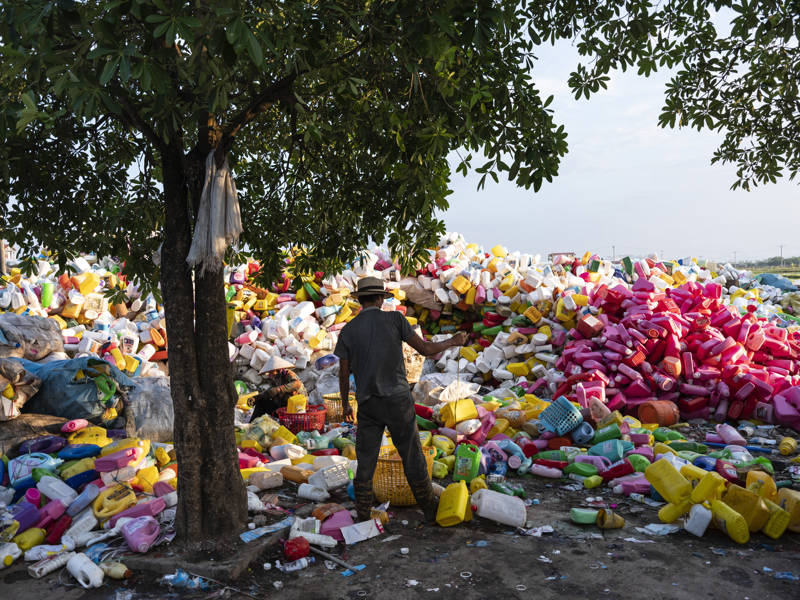
Unlike many of Jarlbro’s previous photojournalistic series, « Poly » was not a predetermined single assignment. Rather, the series was added based on previous reflections from other trips he has completed in countries such as the Philippines, India or Indonesia, and considers how the economic growth that takes place in the countries he visits does not benefit everyone or is reinvested in social structure such as recycling, clean water and sewage for all. The financial conditions for the individual can vary greatly. During these trips, Jarlbro has noticed how people’s living conditions in shadow communities in different places in the world are united through plastic. How people are exposed to the consequences of plastic, their own use of plastic products and how some get plastic as a livelihood.
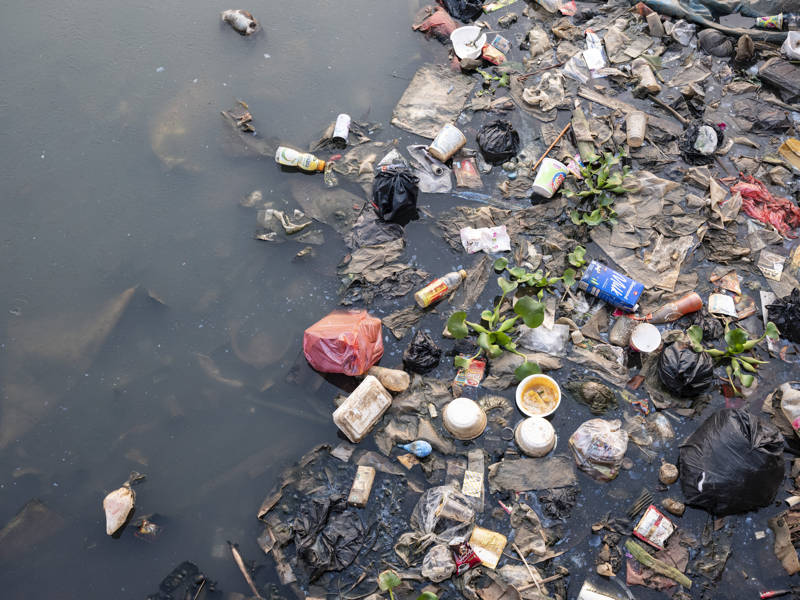
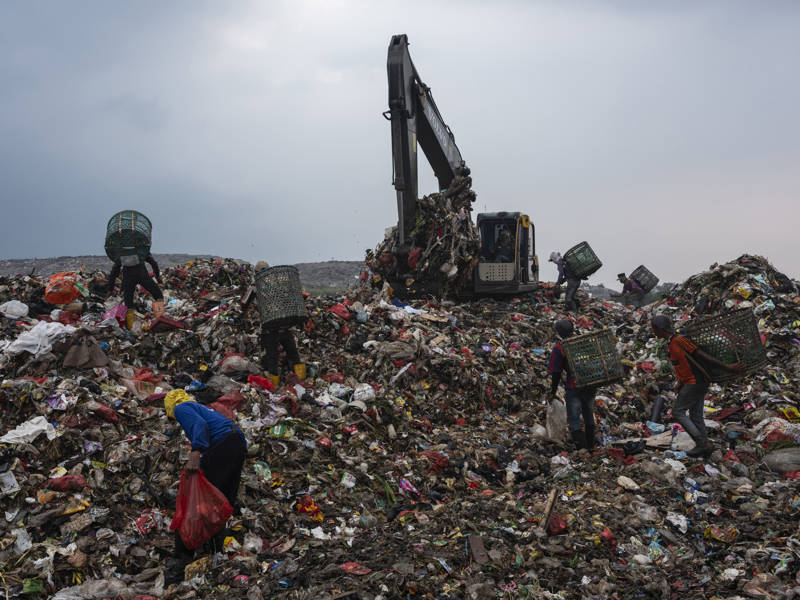
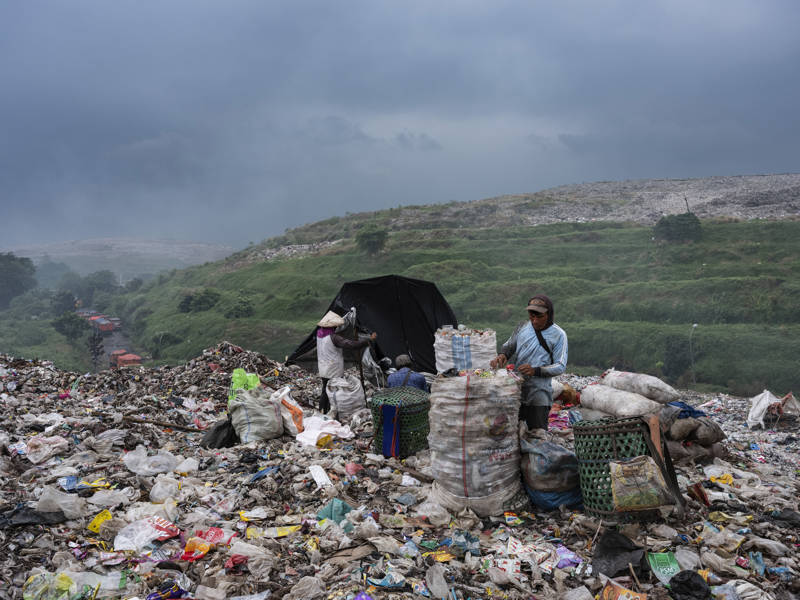
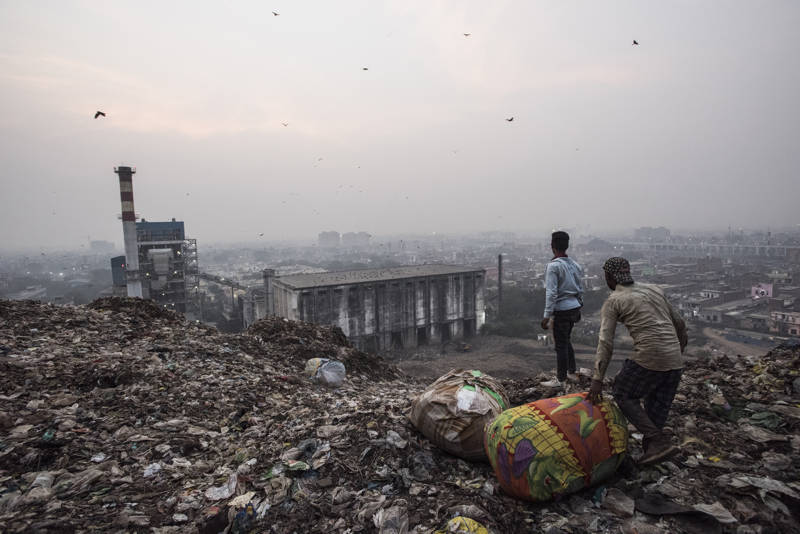
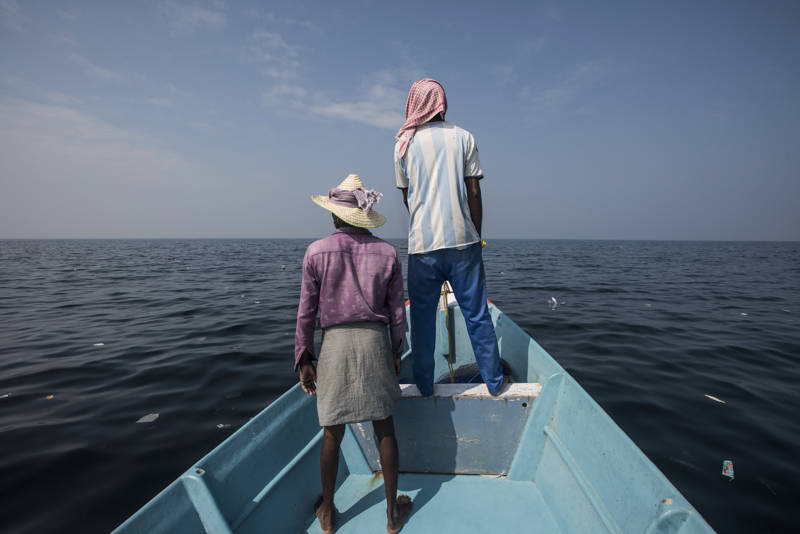
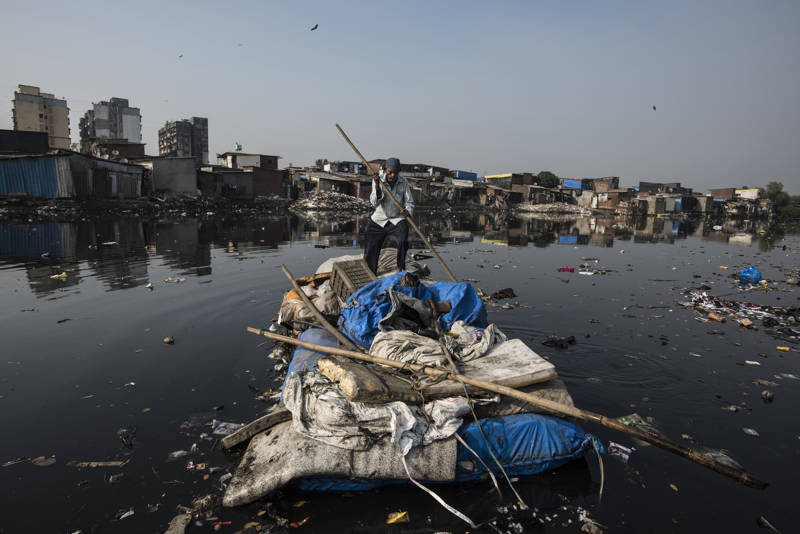
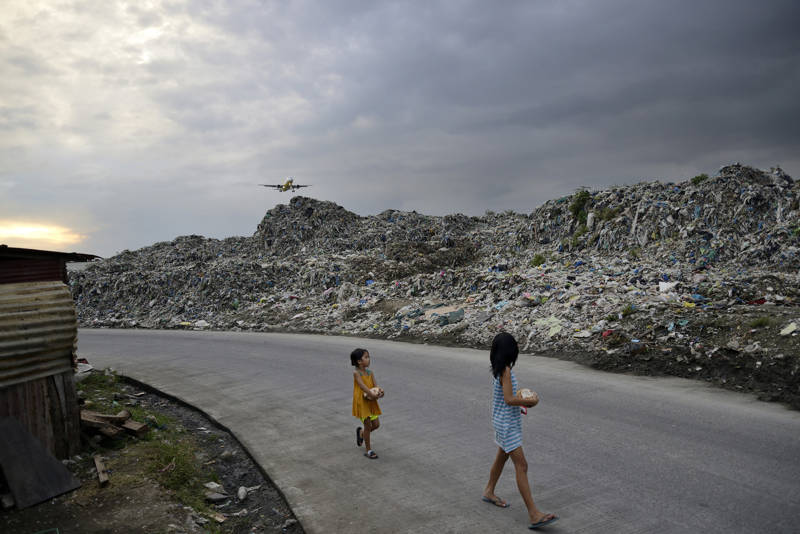
In the pictures that are part of the « Poly » series, we see mountains of plastic. Used plastic can be found everywhere. In the cities outskirts, its spaces and back streets. It spreads over and changes the landscapes where it creates new mountains and fields. It is found in the oceans where it forms its own interconnected clusters and death traps for marine lifeforms. The plastic is found on the highest peaks like Mount Everest and in the deepest ocean pockets. In addition, microplastics are now found in the food we eat and in all living things on earth, including humans. The plastic is poisoning us. And the annual production of 400 million tons of plastic that is manufactured has to go somewhere.
Those at the top of the food chain can still afford to run away, turn a blind eye and send their consumption elsewhere — to the outskirts of the city or more preferably to another continent. They do not move in places where the abandoned plastic is visible. If necessary, they can literally fly over the new plastic lanyards. They can calm their conscience with a soy latte in organic packaging at a price that far exceeds a day’s income for the majority of those further down the food chain.
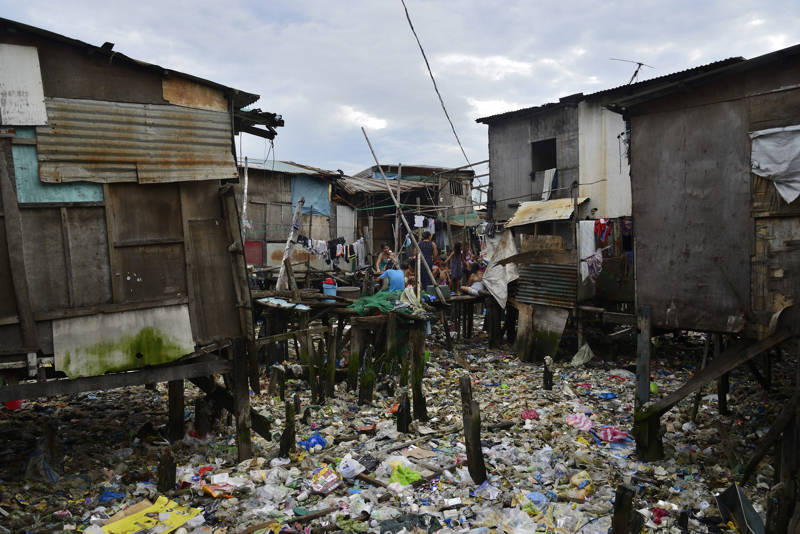
Jarlbro visually portrays how the use of plastic has become associated with poverty, be it for marginalized people in Hanoi, Ho Chin Minh, Jakarta, Kolkata, Mumbai, Chennai, Bangalore, Manilla or similar cities. In the images, people live their lives in these new landscapes made of plastic that poses a threat to health, poisons land and drinking water. At the same time, it can provide a livelihood for those at the bottom of the food chain who collect, sort, transport and resell the plastic.
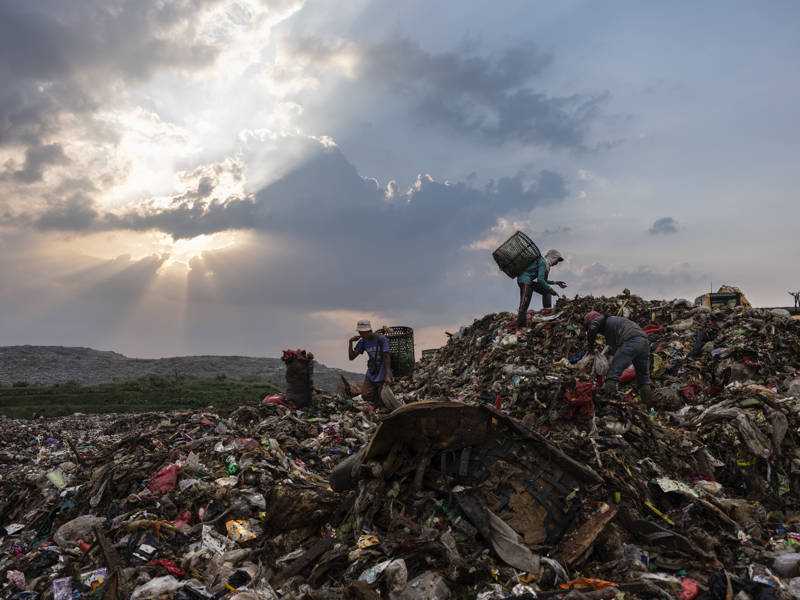
The images in the series « Poly » are not only to be considered against the background of photojournalism, but also with references to image and art history as well as popular culture. The images in « Poly » are not only in dialogue with Friedrich’s painting. The images can also be reminiscent of depictions of the apocalypse in art history or constitute a film still taken from a dystopian vision of the future where the apocalypse has already occurred and where humanity has been divided into the privileged and the marginalized on the outer edges who fight for the remaining scarce resources.
The plastic also collects in the water and the sea. Like Leviathan, the plastic gathers as a larger sea monster that strikes back and destroys humanity. In some of the images, boats and people navigate the polluted water. Perhaps a reference to the underground river Styx that maintains a boundary between the realms of life and death. Perhaps it is also Charon the viewer sees in some of the images — the ferryman who brought the dead across the river. Here the journey is to a contemporary Hades where people are stuck living their lives as among the living dead of civilization.
It may seem that Jarlbro is depicting the apocalypse. Hopefully he doesn’t — not yet anyway. Admittedly, the images can be interpreted as a low-frequency event towards which humanity is now approaching. On the other hand, Jarlbro’s visual world does not only depict a deterministic misery. His picture series also show human striving and dignity. The people he meets and portrays, despite their living conditions, show a stoic virtue of accepting their fate with equanimity and fighting for their own and their family’s survival — and for the good of humanity. After all, there is often both warmth and optimism in Jarlbro’s picture series. It gives an optimism that humanity continues to fight.
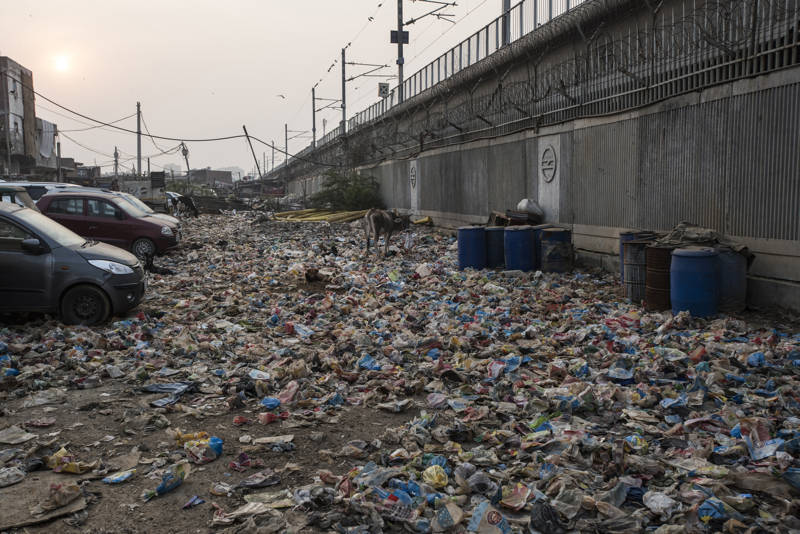
Like the crucifix who walks with the plastic as his cross. A Calvary walk that for him will probably never end. But the man still carries his yoke and contributes to saving the world in a small way by literally recycling the sins of mankind.
Jarlbro, in his capacity as a photojournalist, relies on the images and stories that are portrayed — and the viewer’s ability to see — and, by extension, to think and reflect on existence here and now. Jarlbro’s purpose is not to come up with any real answers — it is up to the viewer to reflect on the world we live in — and how we choose to live in it. In the end, Jarlbro also asks how we as individuals both practically and existentially relate to the whole — based on nature and humanity — just like Caspar David Friedrich.


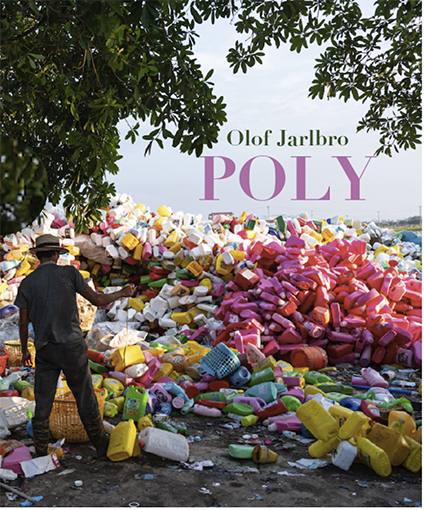
« Poly », photographs and text by Olof Jarlbro. Foreword Martin Schibli. Rough dog Press, 2024. 231 p, 24 x 28 cm.
Hardcover, Language Swedish and English. ISBN 978-91-981210-5-6